Open Monday - Friday 12:30 - 19:00
Open Monday - Friday 12:30 - 19:00
£695.00
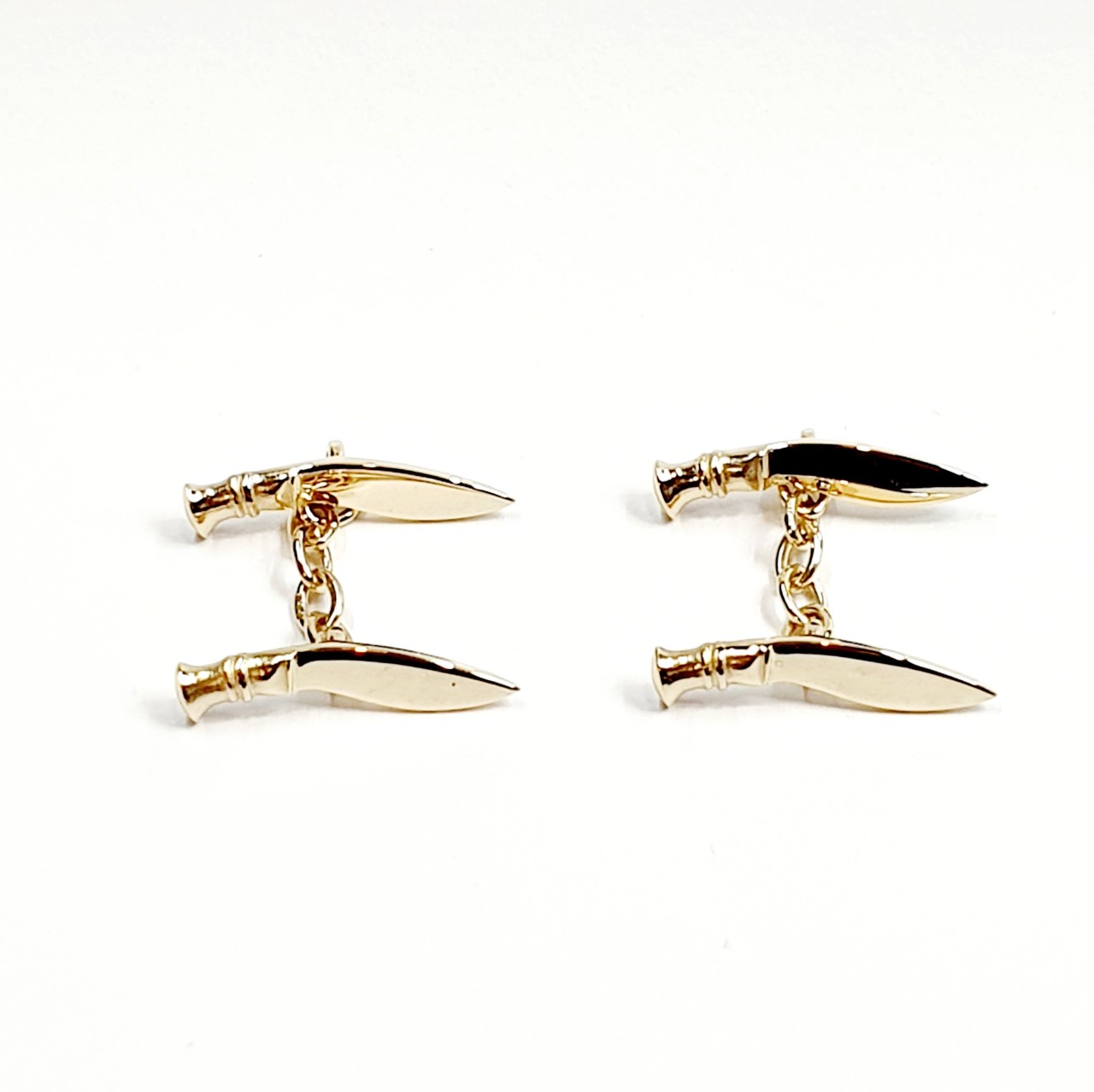
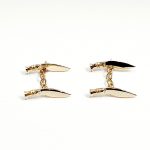
City of London Jewellers Present The 9ct-Gold Gurkha Knife Cufflinks.
Measurements:- 21.8mm x 5mm x 2mm.
Crafted in 9ct yellow gold with a highly polished finish. They Don’t Like It Up ‘Em, You Know!
They would make a great gift for a loved one or a presentation.
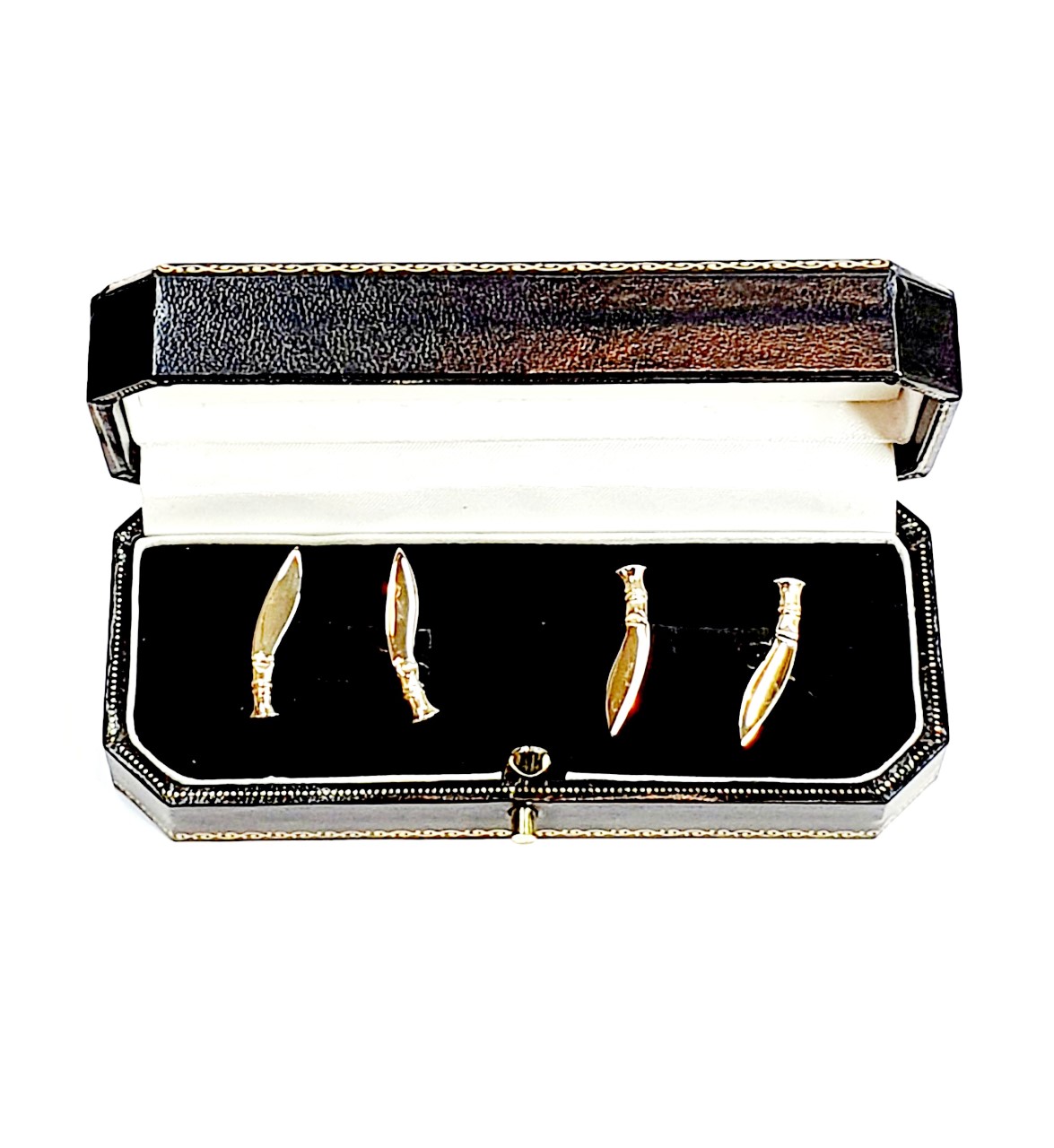
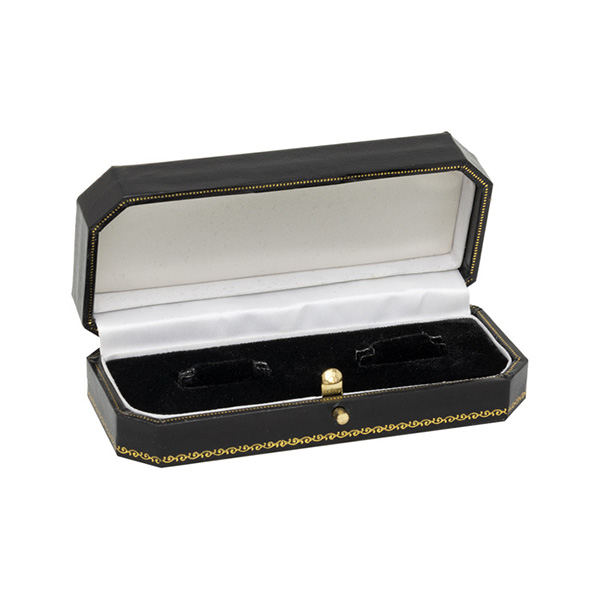
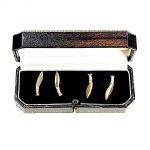
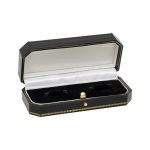
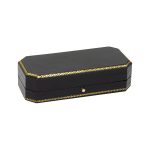
Supplied in a beautiful antique-style presentation box. Please scroll the picture to see the box.
| Fitting | |
|---|---|
| Carat | 9ct |
| Gemstone | |
| Precious Metal | |
| Section | |
| Wedding Anniversary |
We’ll notify you if delivery costs change before dispatch. Orders are processed during our opening hours: Monday to Friday, 1:30pm – 6:30pm.
Customers must provide a secure delivery address where the parcel can be signed for. We cannot be held responsible for loss or damage due to an unsafe delivery location.
All of our products come with complimentary wrapping paper, and all rings come in a box.
For specific details on how to upkeep your jewellery, please read our guides on our blog.
The city of London Jewellers Presents the Folkestone 9ct Gold Gurkha Knife Cufflinks CCKN00021.
Measurements:- 21.8mm x 5mm x 2mm.
Gurkha Knife Cufflinks CCKN00021.
There are over 3,000 Gurkhas in the British Army today. Major Gurkha bases in the UK include Folkestone, Catterick, Edinburgh and Brecon. Most Gurkha serve for a minimum 15 years but can continue on to a maximum of 30 years of service. Gurkhas serve in a variety of roles, mainly in the infantry.
MORE RECENT HISTORY OF THE GURKHA’S
Formation of The Royal Gurkha Rifles. In 1994 The Royal Gurkha Rifles were formed from the 2nd, 6th, 7th and 10th Gurkha Rifles. 2 GR and 6 GR formed the 1st Battalion, 7 GR formed the 2nd Battalion and 10 GR formed the 3rd Battalion. In 1996 2 RGR and 3 RGR were amalgamated into 2 RGR. In 2020 3 RGR reformed as a Specialised Infantry Battalion.
Folkestone Gurkha Knife Cufflinks CCKN00021.
Band of The Brigade of Gurkhas. In 1955 the Staff Band Brigade of Gurkhas was formed. In 1970 it was amalgamated with the Band of the 2nd Gurkha Rifles (which had a band rather than the Pipes and Drums of the other Gurkha regiments) to form the Band of the Brigade of Gurkhas (2 GR), becoming the Band of the Brigade of Gurkhas on the absorption of 2 GR into The Royal Gurkha Rifles in 1994
Gurkha Staff and Personnel Support Company. Originally clerks in Gurkha units were Indian civilians or Indian military clerks but were replaced eventually by ‘line boys’ (sons of soldiers born in station) and Gurkhas recruited from Darjeeling in India, where standards of education and the English language were higher. As education in Nepal improved, clerks were recruited from there specifically as clerks using different recruiting standards and were badged to the regiment in which they were employed. In 1994 all clerks were designated as being RGR, regardless of where they served, and in 1995 separate clerical recruiting was abolished and clerks were selected during recruit training from those who had the required high standard of education and a strong grasp of the English language. In 2011 the Gurkha Staff and Personnel Support Company was formed as part of the Adjutant General’s Corps.
Gurkha Company. Gurkhas have always been trained separately from the rest of the British Army. Training Depot Brigade of Gurkhas was first established on 15th August 1951 in Sungai Petani, Kedah, Malaysia. The Training Depot then moved to Hong Kong in 1971. When the centre of gravity of the Brigade moved to the UK, Gurkha Training Wing was established in Queen Elizabeth Barracks, Church Crookham, Hampshire in 1994. From then on recruits were allocated to regiments during recruit training, dependent upon aptitude and the recruit’s preference. In 1999 the training company moved north and was named ‘Gurkha Company’ as part of one of the Training Battalions of the Infantry Training Centre Catterick, School of Infantry in North Yorkshire.
Gurkha Units have seen service in jungles, mountains, deserts, and plains and have soldiered through snow, rain, mud, cold and heat. Adversaries have been Tribesmen, Sikhs, Malays, Afghans, Germans, Turks, Japanese, Italians, Iraqis, the Taliban and Al-Qaeda. Throughout their history, they have served and fought to the highest of standards, and have earned a reputation for bravery, loyalty, courage and for light infantry excellence.
army. mod. The UK.
Folkestone-Gurkha-Knife-Cufflinks-CCKN00021.
|
Uploaded
Failed
|
 |