Open Monday - Friday 12:30 - 19:00
Open Monday - Friday 12:30 - 19:00
£395.00
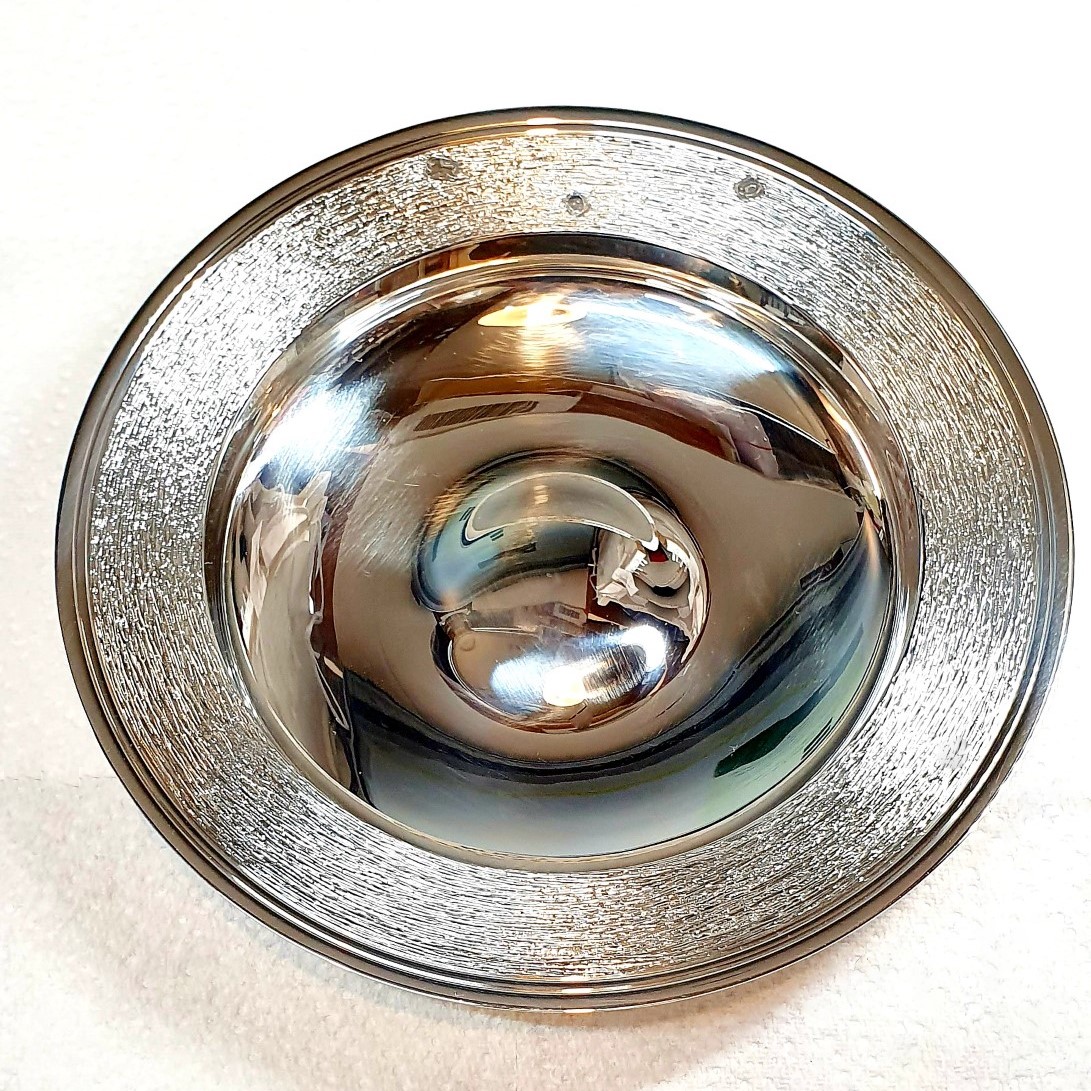
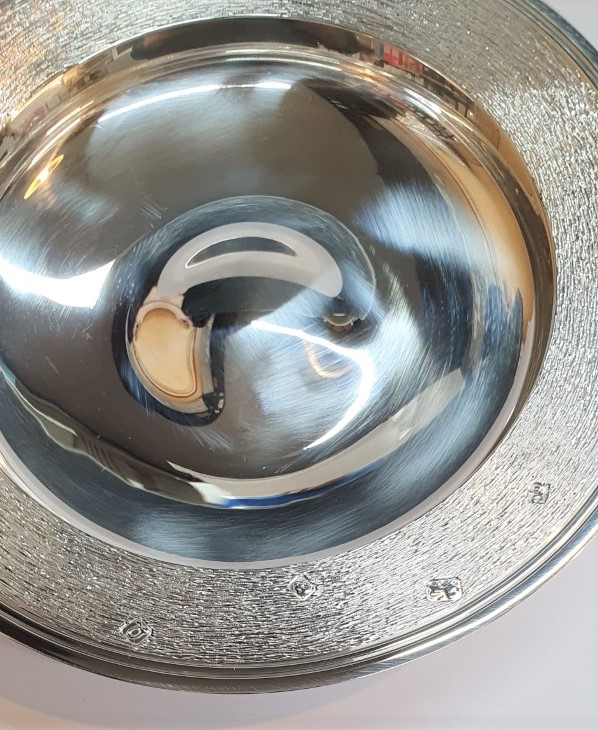
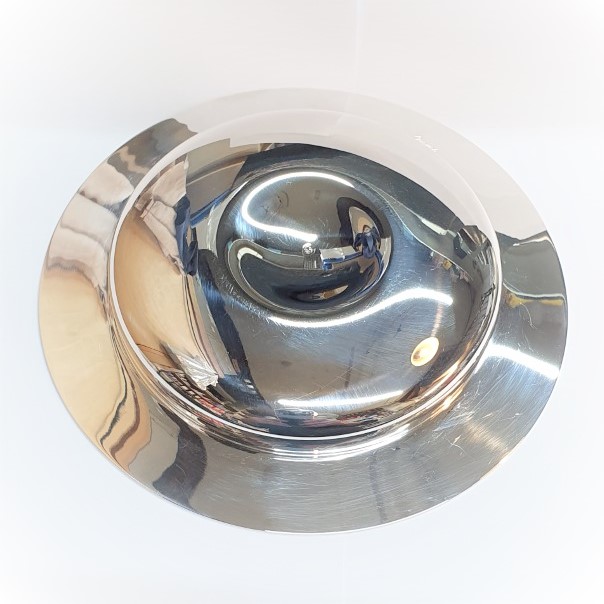
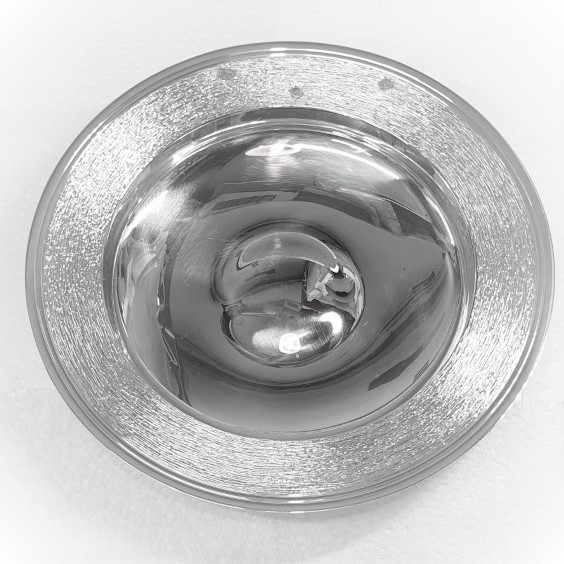
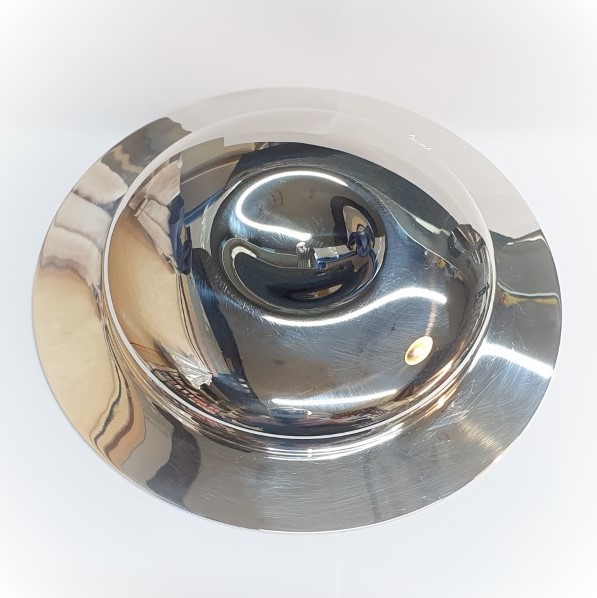
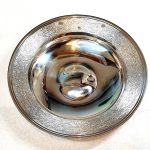
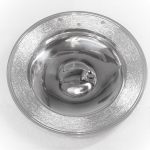
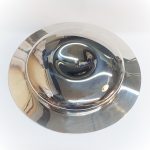
This beautiful armada dish has a hand engraved tree barked pattern to the rim with a highly polished centre very good condition few light scratches.
Armada 6 3/4 inches. 17cm.
We’ll notify you if delivery costs change before dispatch. Orders are processed during our opening hours: Monday to Friday, 1:30pm – 6:30pm.
Customers must provide a secure delivery address where the parcel can be signed for. We cannot be held responsible for loss or damage due to an unsafe delivery location.
All of our products come with complimentary wrapping paper, and all rings come in a box.
For specific details on how to upkeep your jewellery, please read our guides on our blog.
17cm Real-Silver Armada Dish.
The Spanish Armada was a Habsburg Spanish fleet of 130 ships that sailed from Corunna in late May 1588, under the command of the Duke of Medina Sidonia, with the purpose of escorting an army from Flanders to invade England. Medina Sidonia was an aristocrat without naval command experience but was made commander by King Philip II. The aim was to overthrow Queen Elizabeth I and her establishment of Protestantism in England, to stop English interference in the Spanish Netherlands and to stop the harm caused by English and Dutch privateering ships that interfered with Spanish interests in the Americas.
Provenance
The Armada Service was commissioned by Sir Christopher Harris (c. 1553–1625), of Radford in the parish of Plymstock, Devon, a Member of Parliament for Plymouth in Devon in 1584, Vice-Admiral of Devon during the reign of James I and a Commissioner for Booty at Plymouth under Sir Walter Raleigh. He was a close friend of Admiral Sir Francis Drake, who on one occasion lodged part of his captured treasure at Radford. In partnership with John Hele (died 1608) of Wembury in Devon, serjeant-at-law and MP, Harris acquired the estate of Buckland Abbey in Devon as a seat for Drake. During the 16th and 17th centuries amassing silver was usual for wealthy English families. Such collections served two distinct purposes: to increase family prestige and to act as a store of value or investment.
Discovery
During the Civil War (1642–1651) huge amounts of silver were melted down to pay for military supplies and wages, and the silver dishes were buried by the Harris family on the wild moorland of Dartmoor, near to Radford, to avoid being looted by Parliamentary troops. The silver was never subsequently recovered by the Harris family, who remained at Radford until after 1810, but was at last discovered in 1827, when three farm labourers employed by the Splat company of Brixham, discovered it in a cave they were excavating to increase the storage capacity for the company’s potatoes. The local newspaper reported that “upwards of 30 dishes” had been found. In June 1911 the Splat family sold the dishes at Christie’s auctioneers in London for £11,500
Importance
The service has been described as “one of the most important groups of English silver to have been found in England.” As a set of relatively plain objects, of which the bullion value may have exceeded the artistic worth, this service represents “the unique survival of a type of utilitarian plate which is listed in the inventories of the gentry and aristocracy of the late Tudor and early Stuart periods.”
Nomenclature
The nomenclature of the hoard’s name is subject to speculation by scholars. It was named by modern scholars the Armada Service in allusion to the Spanish Armada of 1588, a failed attempt by Spain to invade England, as it is believed to have a connection to New World Silver captured and pilfered from the Spanish treasure fleet operating at about that time. 31 pieces were “commissioned to mark the conquering of the Spanish naval fleet and used at a dinner thrown” at Harris’s seat at Radford. Some modern scholars have suggested a connection to the Madre de Deus (Mother of God), a Portuguese ship captured by the English in about 1590. However, Sir Christopher Harris worked for Sir Walter Raleigh in the Admiralty during the Anglo-Spanish War (1585–1604). His acquisition of these dishes at about the same time may suggest that they “represent the profits of his office”.
17cm-Real-Silver-Armada-Dish-MISCQ00008
|
Uploaded
Failed
|
 |